Voiceover for Museum Audio Tours and Exhibit Guides
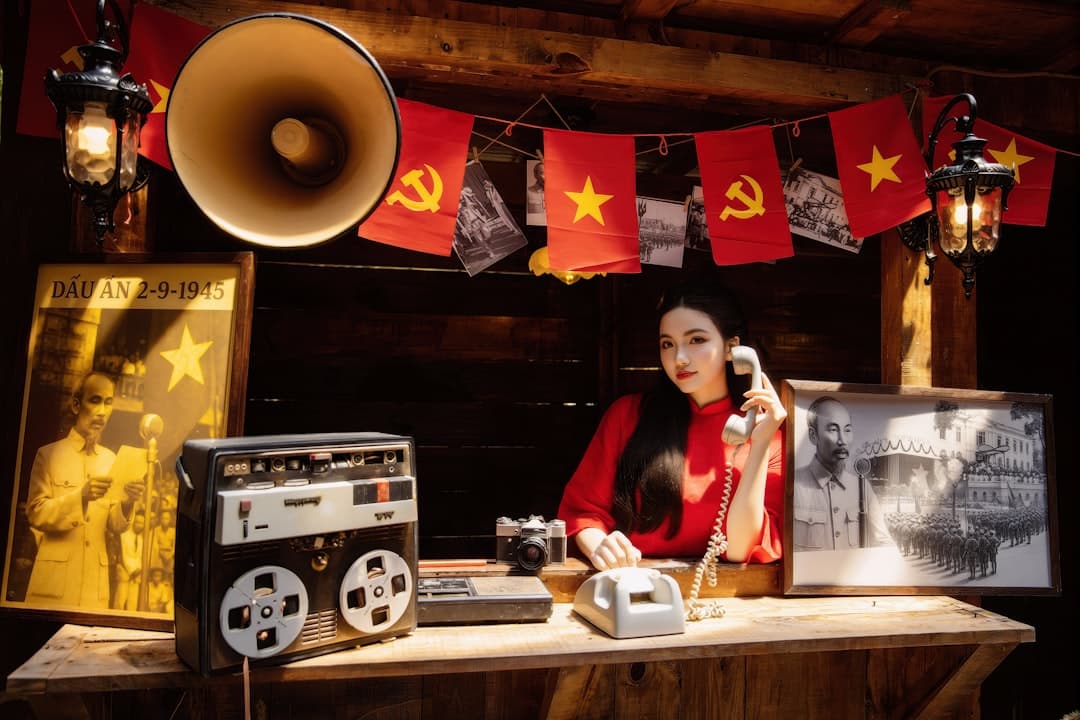
Walk into a well-designed gallery and the voice in your headset becomes part of the architecture. It tells you where to stand, what to notice, when to move on, and it does all of this while staying out of the way of the artifact in front of you. That balance is harder to strike than most scripts assume, and it is the reason museum directors and exhibit designers tend to look for a specialist rather than a generalist when they cast a narrator.
I record voiceover for audio tours, exhibit installations, and interactive kiosks from my studio in Orlando, and the work has its own rules. A museum audio tour narrator works differently from a commercial or audiobook performer. The voice has to function as a guide, a companion, and an instructor at the same time, often for a visitor who is tired, distracted, or standing in a crowd. Below is how I think about that job and what I would want a director to know before casting it.
What Makes Museum Narration Its Own Discipline
The core difference is that your audience is moving through a physical space while they listen. They are reading a label, looking up at a painting, or watching a short film loop, and the narration has to ride alongside that activity instead of demanding full attention.
That changes how I pace a read. I leave more room between thoughts so a visitor can glance at the object before the next sentence arrives. I land directional cues, such as "to your left" or "the case in the center of the room," with a small lift so they register as instructions rather than blending into the description. And I keep my energy steady across a forty-minute tour, because nothing breaks immersion faster than a narrator who sounds bright in stop one and bored by stop twelve.
Exhibit voiceover for interactive installations adds another layer. A touchscreen that triggers a thirty-second clip needs a read that works in isolation, since the visitor might hear it cold without the context of the stops around it. I script and perform those segments to stand on their own while still matching the tone of the larger tour.
Matching the Voice to the Subject and the Audience
A Holocaust memorial and a children's science center should not sound the same, and a good audio guide voice actor adjusts well beyond simply reading slower or faster.
For a somber history exhibit, I pull my energy down, slow my cadence, and let silences do real work. Restraint carries more weight than performance in that setting. For a hands-on kids' gallery, I bring warmth and a bit of play into the read, because a flat delivery loses a young audience in seconds. A fine art collection usually wants something measured and confident, the tone of a knowledgeable guide who respects the work without lecturing.
I always ask who the visitor is before I record. A natural history museum serving school groups needs vocabulary and pacing that a ten-year-old can follow. A specialized archive built for scholars can carry denser language and longer sentences. Telling me the audience up front lets me make those calls in the booth instead of guessing.
Scripts Built for the Ear
Curators write beautifully for print, and that writing often does not survive contact with a microphone. A sentence that reads cleanly on a placard can run thirty words deep with three subordinate clauses, and by the time I reach the end of it out loud, the listener has lost the beginning.
When a museum brings me in early, I flag the lines that will fight the ear. Long dates, dense lists of provenance, and tongue-twisting proper nouns all benefit from a quick pass before recording. I will ask for the pronunciation of an artist's name, a foreign place, or a scientific term rather than guessing, and for tricky cases I request a reference clip or a phonetic spelling so I get it right the first time.
If you have not finalized the script, build in short stops rather than marathon ones. Two minutes per object is a comfortable ceiling for most general audiences. Anything longer and visitors start pulling the headphones off mid-sentence to keep moving.
The Technical Side That Keeps a Guide Intelligible
Gallery audio gets played back on cheap handset speakers, lent-out earbuds, and visitors' own phones, frequently in rooms with hard surfaces and ambient noise from other groups. A recording that sounds fine in a quiet office can turn to mush in that environment, so the technical foundation matters as much as the performance.
I record in a Whisper Room vocal booth with a Sennheiser MKH416 into an Apollo Twin interface, which gives me a clean, present signal with no room reflections baked in. Editing and restoration happen at my desk in Reaper, with iZotope RX 11 Advanced for removing any stray noise, breaths, or mouth clicks that would distract a listener wearing headphones in a silent gallery.
For delivery, I match whatever your hardware vendor or app platform requires. That usually means consistent loudness across every stop so a visitor is not riding the volume button between tracks, clear file naming that maps to your stop numbers, and the exact format your system ingests, whether that is WAV at a specific sample rate or compressed files for an app. Getting these specs from your AV integrator before the session saves a round of re-exports later.
Planning the Project From Both Sides
The smoothest installations I have voiced shared a few habits. The director sent a full script with pronunciations sorted, a stop-by-stop list with target lengths, and the technical spec sheet from the playback vendor. We agreed on tone with one or two reference tracks. Then I recorded, edited, and delivered files labeled to match their map.
If something changes after launch, and it always does, a single narrator who recorded the original makes updates painless. A new acquisition or a re-themed wing should sound like it belongs to the same tour, and that consistency only holds when the same voice comes back for the additions.
Let's Talk About Your Exhibit
If you are casting a narrator for an audio tour, an interactive exhibit, or a kiosk installation, I would be glad to read a sample of your script so you can hear how it lands in the space you are building. Reach out through trevorohare.com with your project details, your audience, and your timeline, and I will send back custom auditions along with the technical specs my studio delivers. Your exhibit deserves a voice that guides visitors without ever getting in their way.
Need a voice for your project?
Broadcast quality voiceover from my studio, priced instantly by script length. From $75.
Written by
Trevor O'Hare
Podcast Editor & Producer
I'm Trevor O'Hare. I edit podcasts for a living, backed by more than 20 years in professional audio. If your show needs a steadier sound, or your week needs fewer editing hours, that's what I do. Flat rates start at $100 per episode.
Learning voiceover? I also teach at VOTrainer.com.